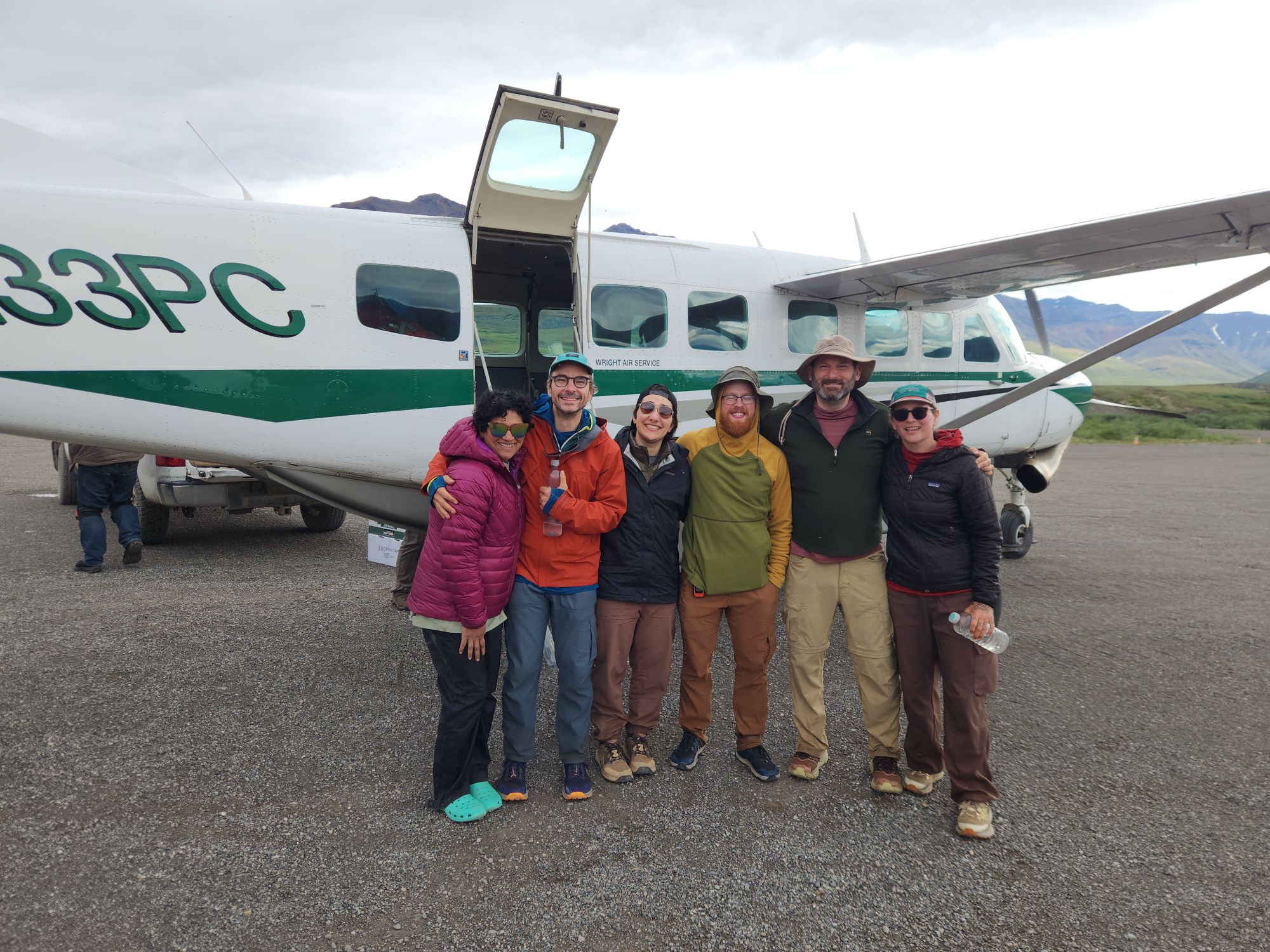
Three eight-day guided backpacking trips in Gates of the Arctic National Park. One for women, trans and non-binary people, and two that are open to everyone. Please read this whole page before applying!
You can read reviews from past participants of my guided trips here.
Info about my other 2027 guided trips is here.
These trips are for backpackers in good hiking shape who want to spend seven days backpacking in Alaska’s Brooks Range and also want to learn to create cross-country routes in caltopo. It’s going to be an epic time!
These trips are in Gates of the Arctic National Park, which is in the central Brooks Range. It’s also one of the areas through which the proposed Ambler Road, a 211-mile private mining access road, would pass. Aside from a few small Iñupiaq villages, accessible only by air, this area has never in its history on earth been developed- and it’s hard to emphasize how special and rare that is. You can read more about the fight against the Ambler road here.
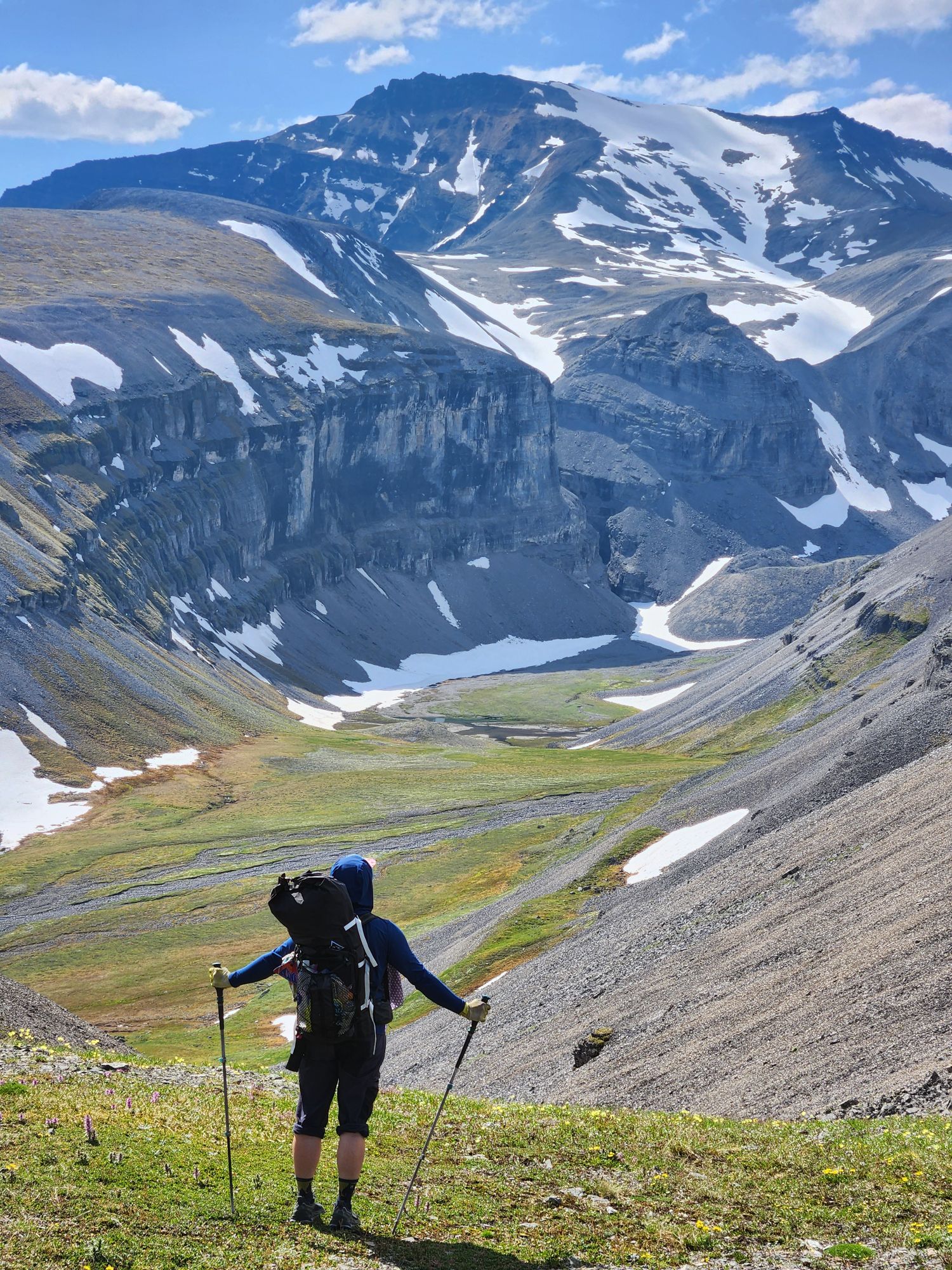
There are three sessions, with five spots available in each session. Each session is seven days of backpacking plus a day in Fairbanks beforehand. We’ll hike 6-10 miles each day, with about 3,000 feet of elevation gain each day.
Dates:
Session one: July 5-12, 2027 (for women, trans and non-binary people)SOLD OUT- Session two: July 15-22, 2027 (open to everyone)
- Session three: July 26-August 2, 2027 (open to everyone)
Cost: $2500- paid all at once or via payment plan of $250/month, with the remainder due before the start of the trip
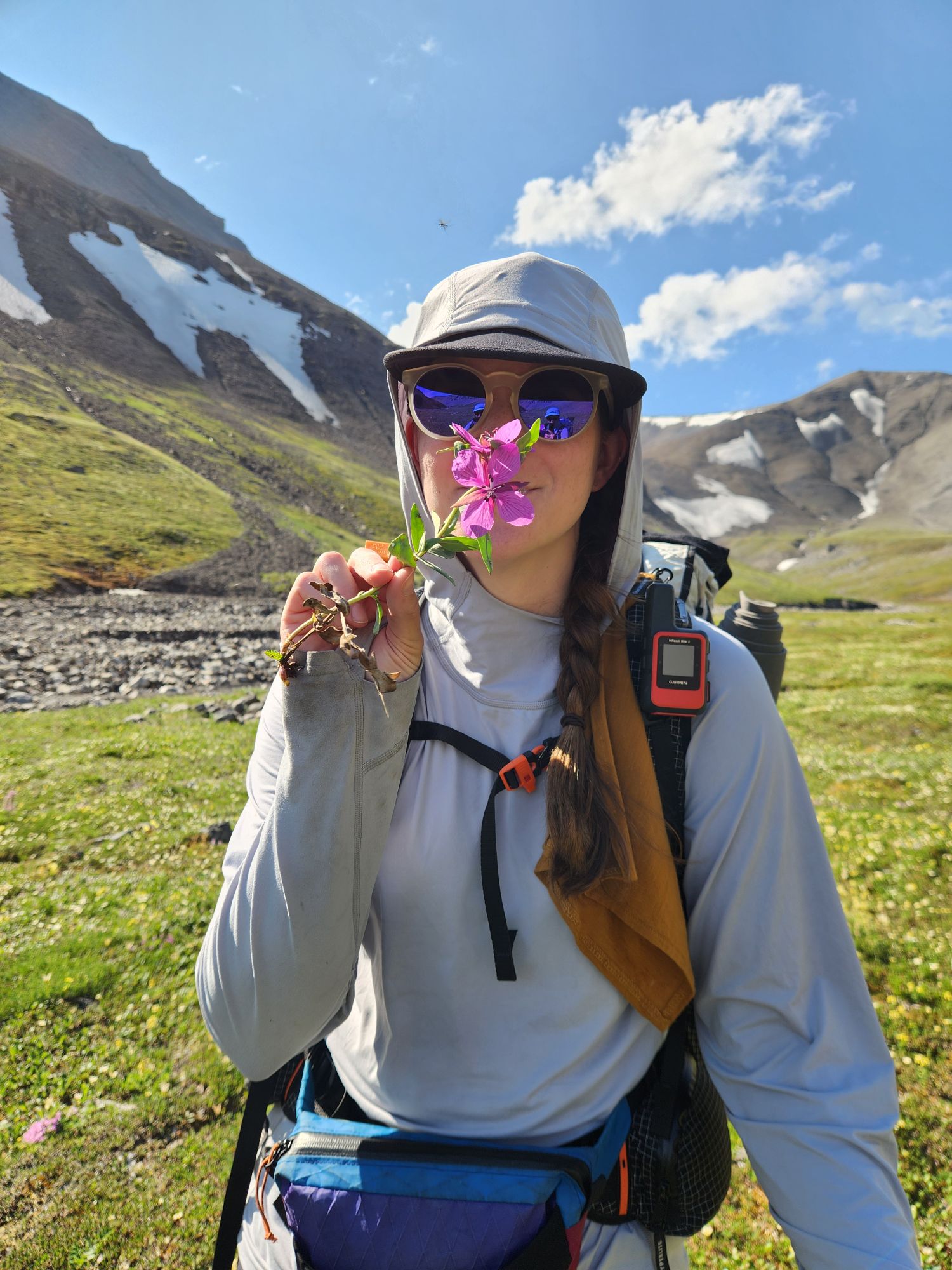
What’s included in the trip: Lodging in Fairbanks the first night of the trip (everyone will have a bed but some rooms will be shared), dinner the first evening and breakfast the next morning (with options for everyone’s dietary restrictions). Rides to errands in Fairbanks. Two hours of one-on-one zoom coaching beforehand, where I teach you how to create a cross-country route on the caltopo website and help you work through aspects of the trip you may have questions about (gear, bears, weather etc), as well a final group meetup on zoom where we’ll plan our route together. Bearspray. Some loaner gear if you need it- packs from Superior Wilderness Designs and Durston x-mid 1 shelters.
What’s not included in the trip: Your flight from Fairbanks to the village in the Brooks Range where we’ll begin our hike (around $180 each way, and you’ll book these tickets yourself). Your flight to and from Fairbanks. Your rides to and from the airport. Your hiking gear and hiking food. Dinner and lodging in Fairbanks the evening we return.
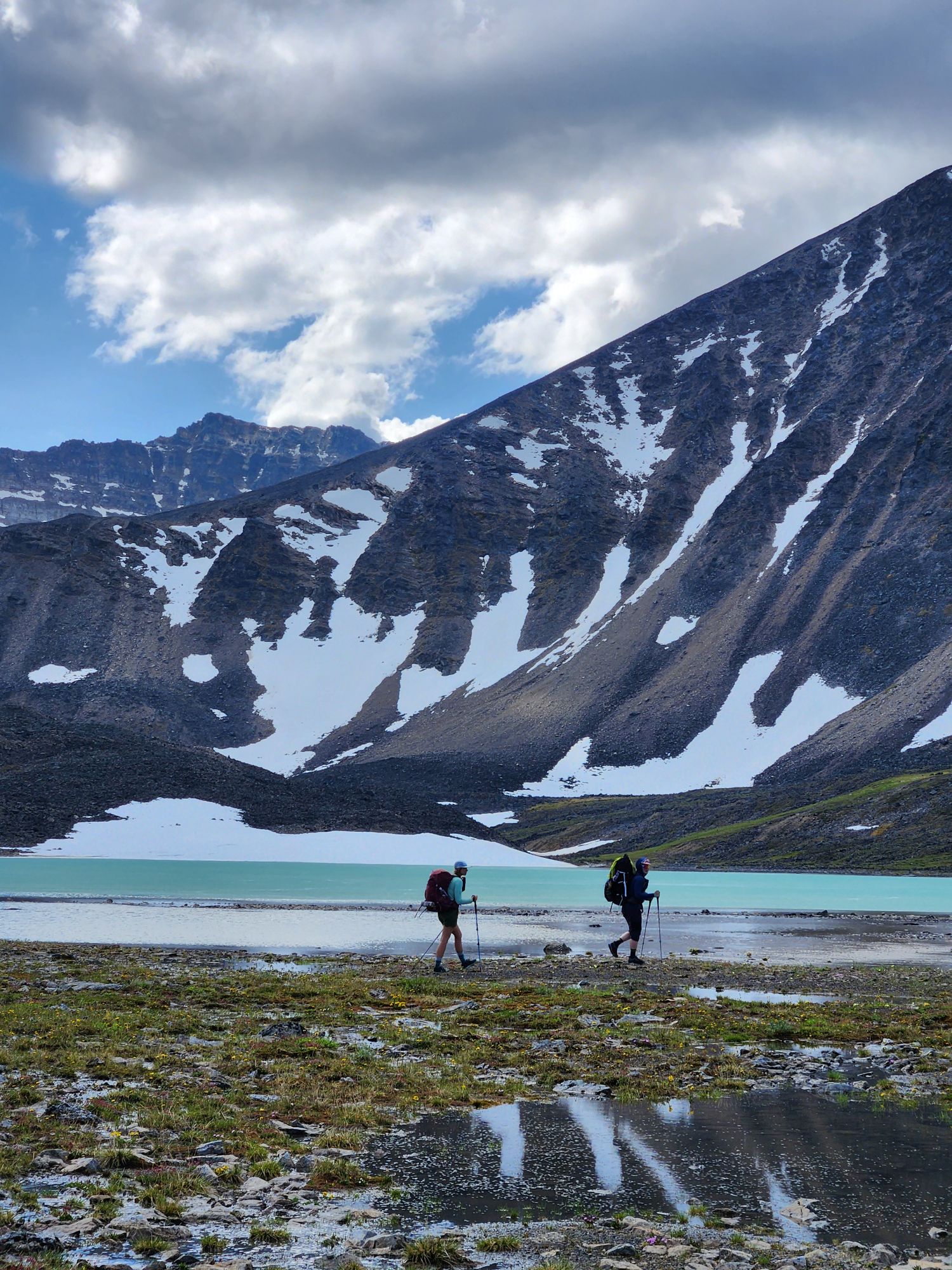
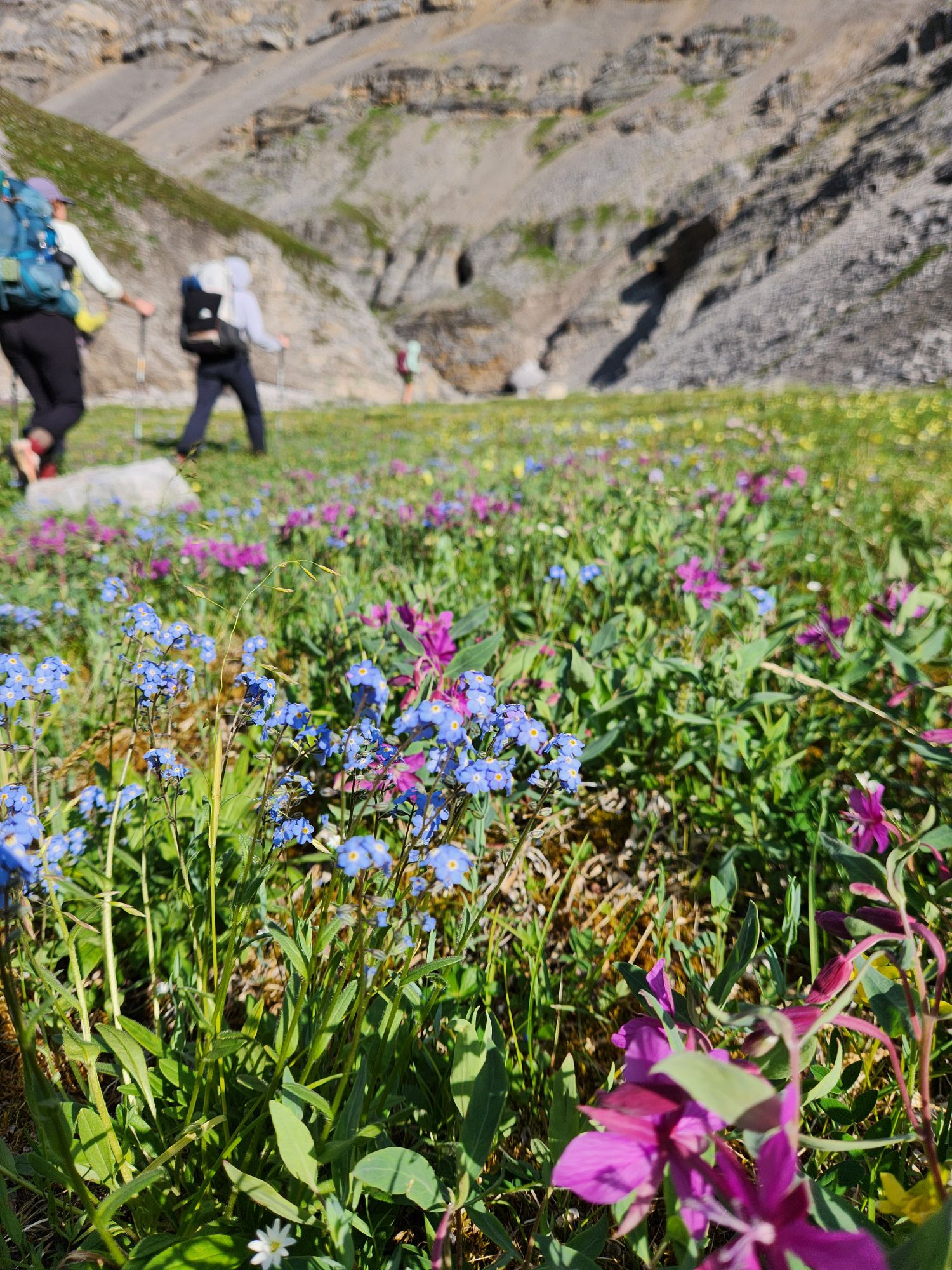
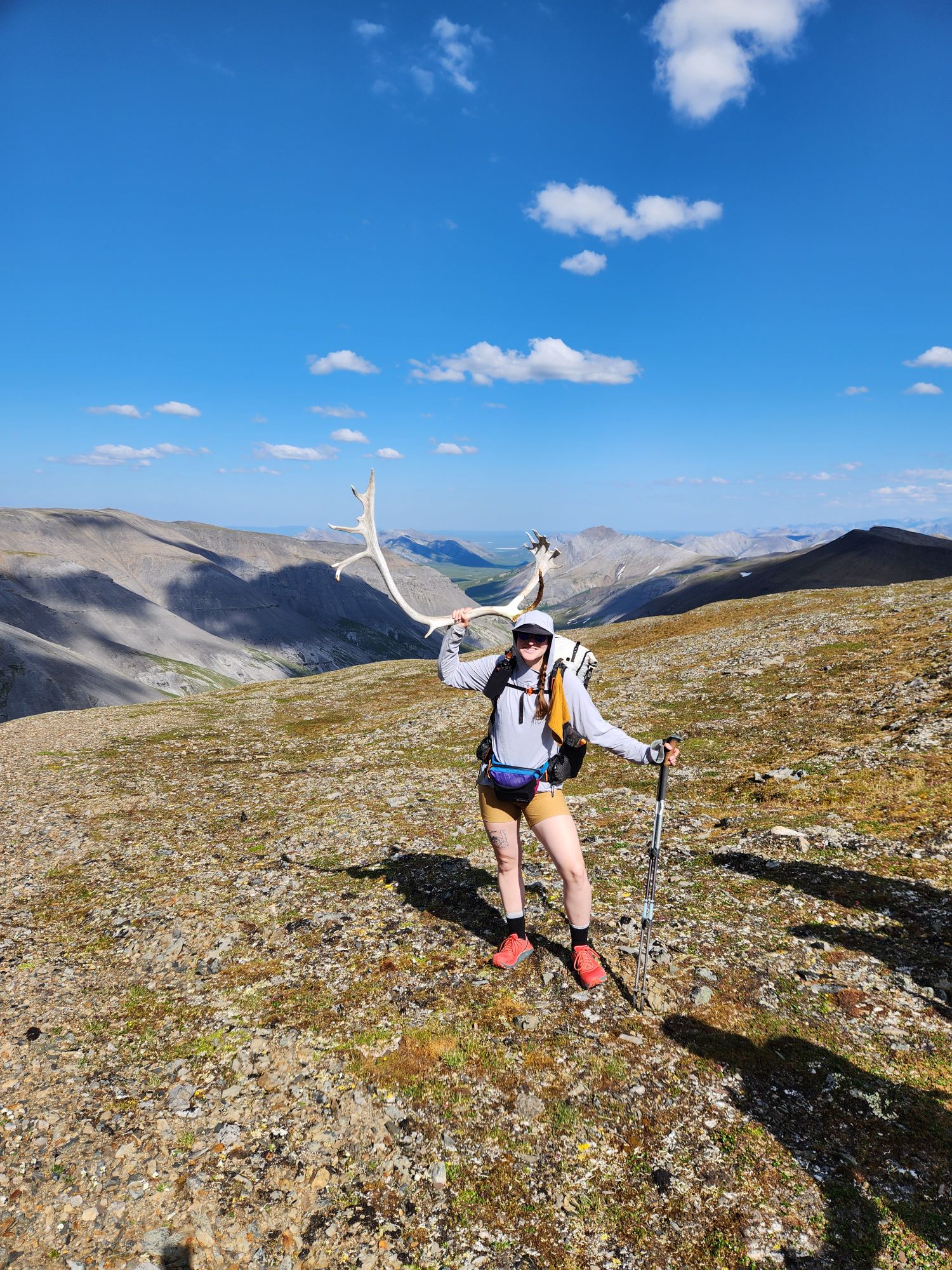
The Brooks Range is a mountain range that runs 600 miles east-west across the Alaskan Arctic, from Canada to the Chukchi sea. It’s bisected by only one road, the Haul Road aka the Dalton Highway, that carries supplies north to oil drilling on the arctic ocean. The Brooks Range is one of the least developed places left on Earth. It is also the traditional home of Iñupiat and Athabascan peoples; these people still live there, have autonomy and practice their subsistence lifestyles, and some non-native people live in villages in the Brooks Range as well. The villages in the Brooks Range that are not on the Haul Road are only accessible by plane, boat, dogsled or snowmachine. The Brooks Range is also home to thousands of caribou, as well as grizzlies, wolves, wolverines, etc. Much of the Brooks Range is north of treeline; the mountains are rolling and green, the walking is along braided riverbeds or across boggy, squishy tundra. There are fewer bears in this part of Alaska than more southern parts of the state, and the relative lack of brush makes the bears easier to avoid. Summer is short and summer weather is random, even moreso now with climate change; it might be 80 degrees Fahrenheit one day, and snowing the next.
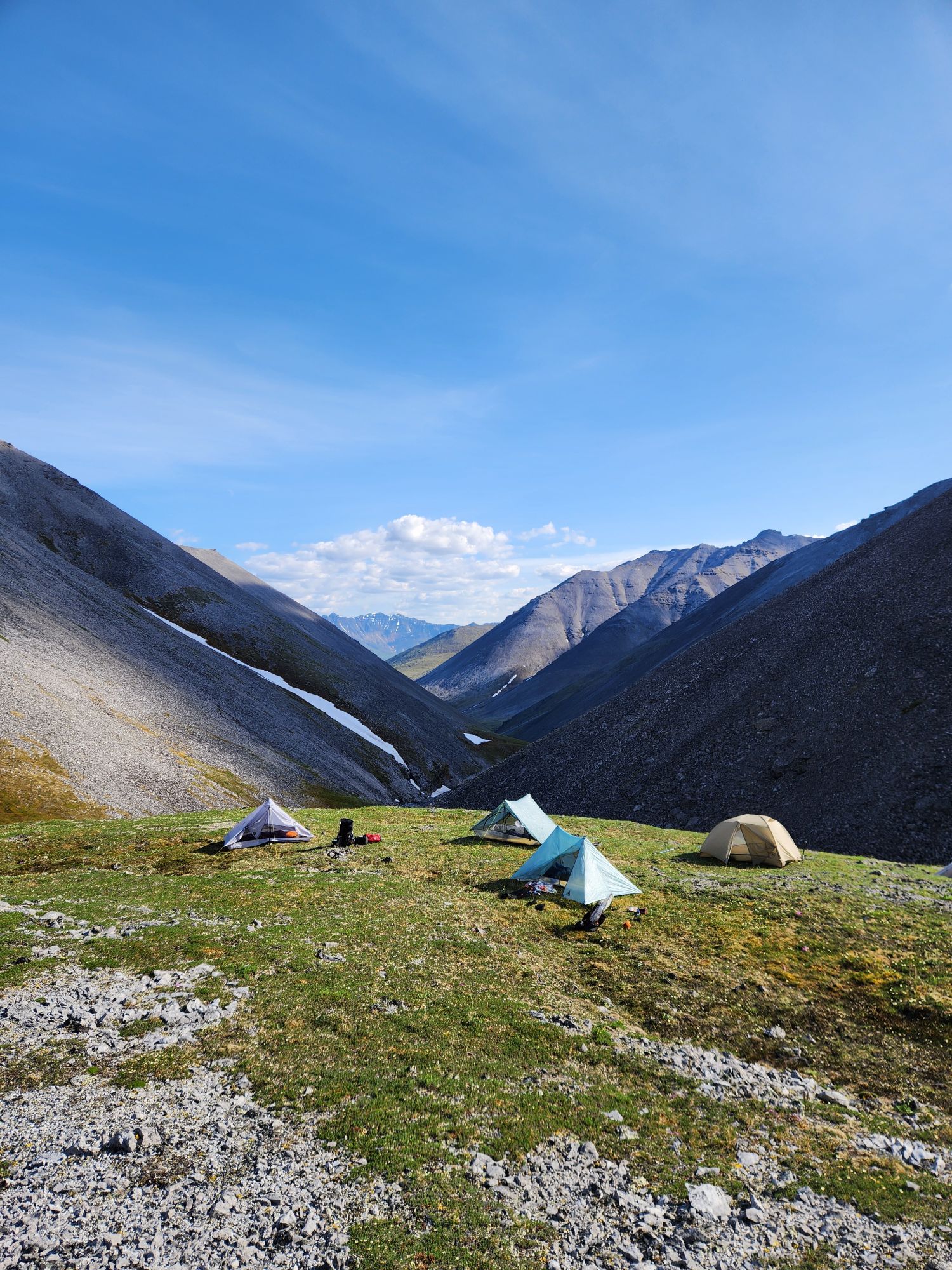
The Brooks Range has no established trails or routes. This is intentional- to travel via foot or packraft in the Alaskan Arctic one must create one’s own route- both to ensure that the traveler is experienced enough and familiar enough with the terrain to stay safe, and for the sheer fun of it- there aren’t many places left in north America without established trails or routes, and so it’s cool to have a place where you still have to do the legwork yourself. Those who do create routes in the Alaskan Arctic are discouraged from sharing those routes online. After this trip, you should be confident enough with route-making in caltopo, as well as with the terrain of the Alaskan arctic, to plan a trip like this of your own in the future.
The Brooks Range may be remote, but it’s also a fairly straightforward place to create a cross-country route, once you have some understanding of the terrain and also know how to create routes. In this course/backpacking trip combo, I’ll teach you how to create a route using caltopo, we’ll work together to create a seven day trip in the Brooks Range (that fits certain parameters), and then, we’ll hike it!
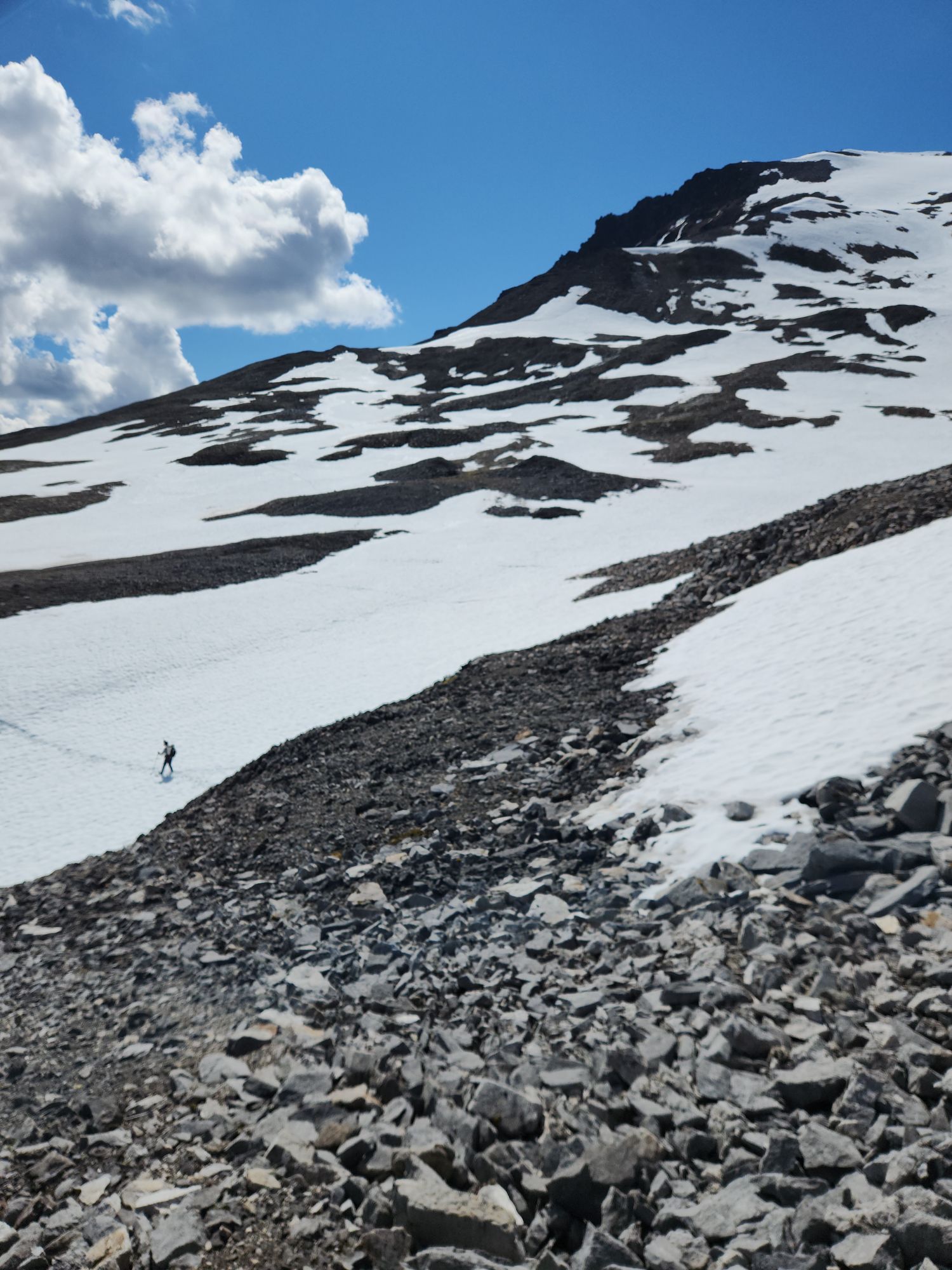
This trip is for backpackers in good hiking shape. Hiking fitness is very important for these trips, as the terrain makes for hard walking. I ask that hikers work up to walking/running/hiking at least 25 miles a week before this trip.
Pack weight is also an important consideration for this trip; carrying a too-heavy pack on uneven terrain can lead to injury. I ask that hikers get their base weight (everything they’re carrying except food, water and fuel) down to 17lbs or less for this trip. If you don’t already have light gear, I will help you with this in the zoom calls! We can come up with a gear list that’s just right for you. I also have some lightweight loaner gear- packs from Superior Wilderness Designs and Durston X-mid shelters.
I require that each hiker pack at least 2,500 calories/day for this trip. If you don’t have experience planning your own backpacking menu, that’s fine! We can use the zoom calls to put together a menu that’s just right for you (with options for dietary restrictions).
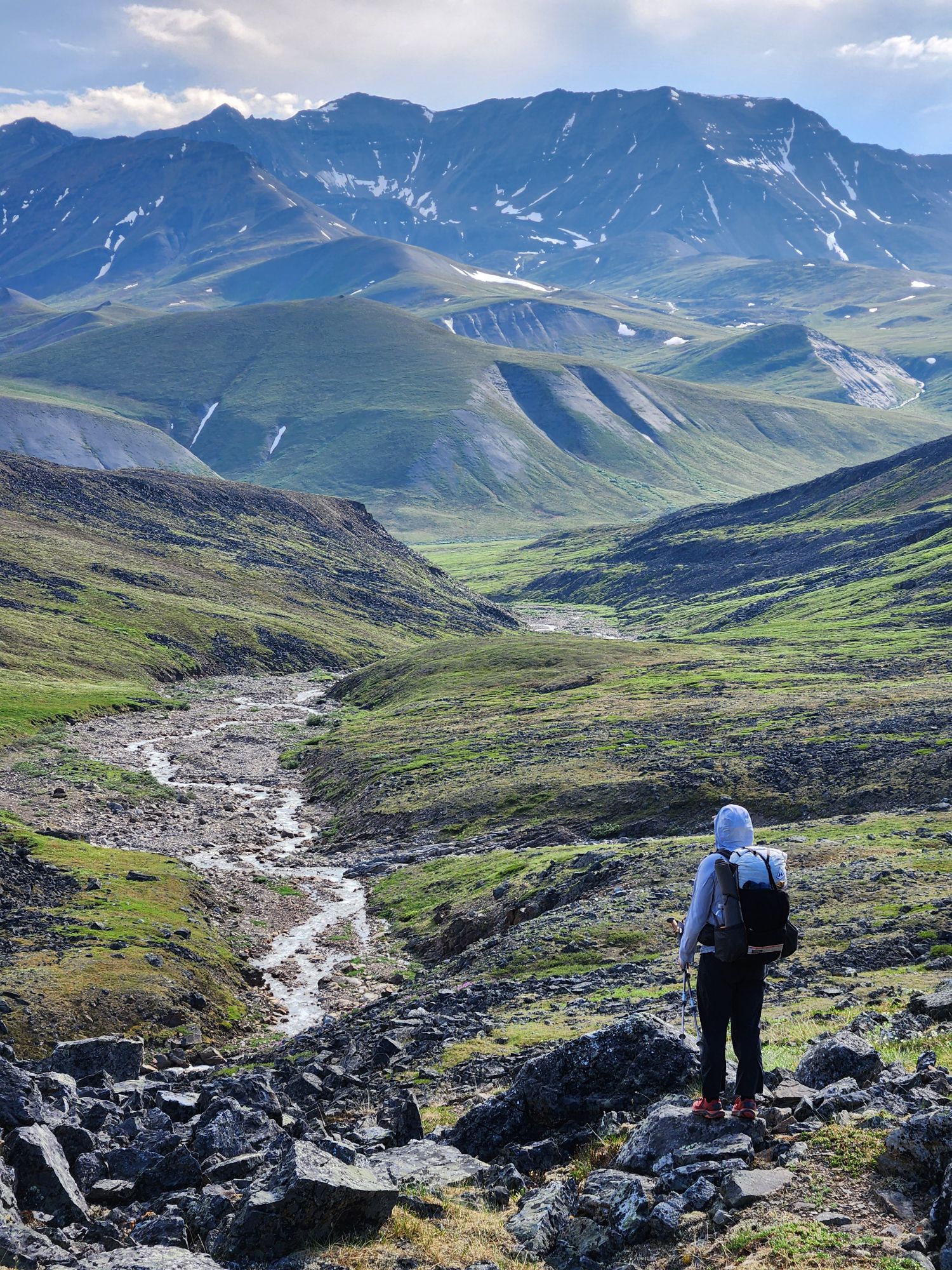
A note: I keep talking about “creating one’s own route” but no route exists in a vacuum; in North America, how to get from point A to point B is knowledge that has been held for generations by the indigenous people of any given area (the best ways over certain passes, which valleys are the least boggy for walking, etc) and so any information we gather about how to walk over the land is information that originated, at some point, from those people, even if we get it from non-native sources. For this reason, “creating one’s own route” is not about doing-it-yourself but rather about being in relationship- with the communities that know and live in an area, as well as with the area itself.
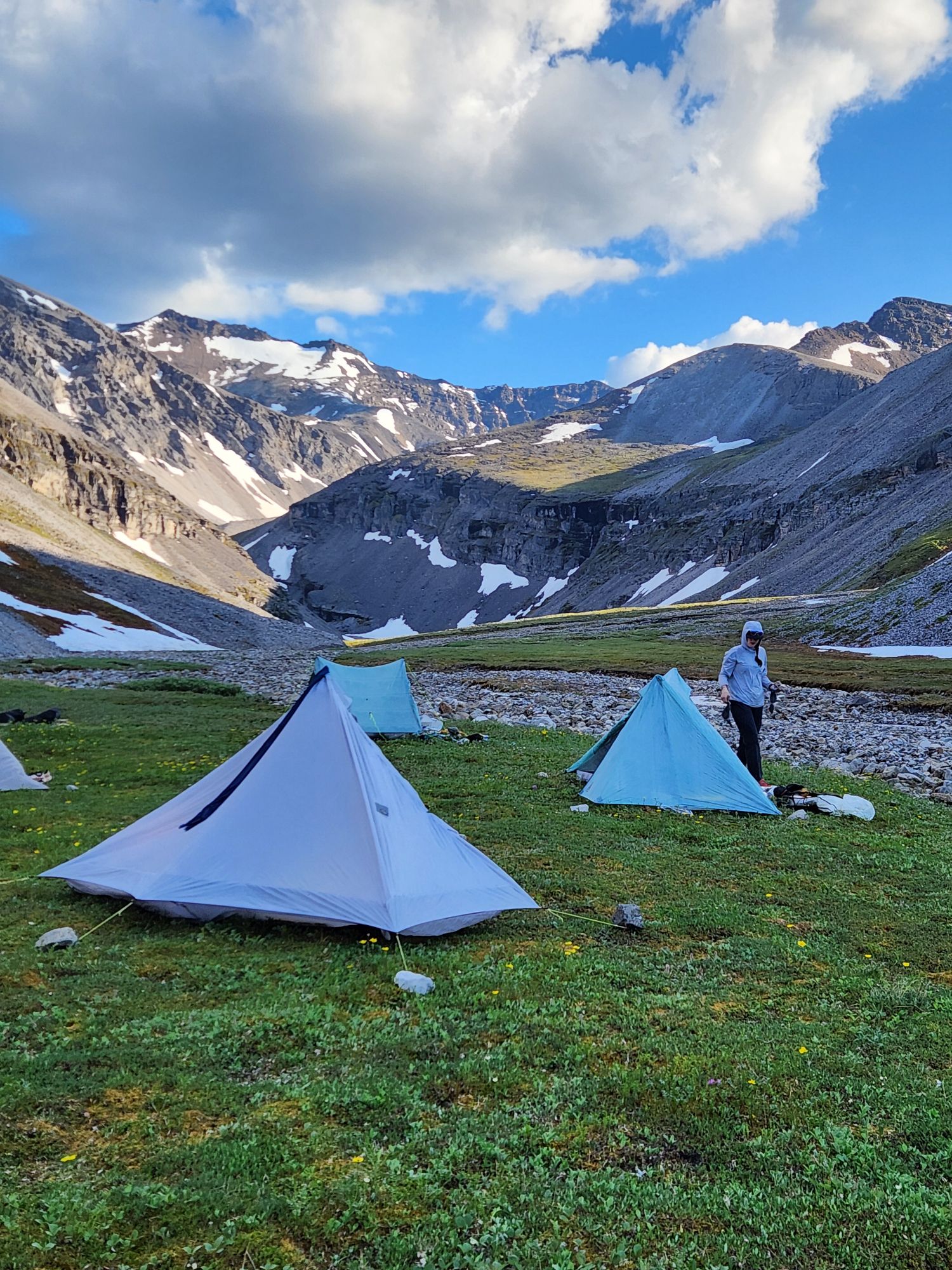
There are three sessions, with five spots available in each session. Each session is seven days of backpacking plus a day in Fairbanks beforehand. We’ll hike 6-10 miles each day, with about 3,000 feet of elevation gain each day.
Dates:
Session one: July 5-12, 2027 (for women, trans and non-binary people)SOLD OUT- Session two: July 15-22, 2027 (open to everyone)
- Session three: July 26- August 2, 2027 (open to everyone)
Cost: $2500- paid all at once or via payment plan of $250/month, with the remainder due before the start of the trip
Itinerary:
In the months before the trip: I’ll meet with each hiker on zoom; two one-hour one-on-one sessions and a final group call. We’ll go over your food, gear and training. I’ll teach you to make cross-country routes in caltopo, give you the parameters for our route (starting point, miles per day, etc) and you’ll make a route. I’ll combine everyone’s routes and in the final group call we’ll create the route (with alternates for weather) that we’ll hike!
Day one: We’ll meet in Fairbanks by 2pm at our lodging. There will be beds for everyone, although some rooms will be shared. I’ll drive us around to our various errands (getting denatured alcohol for our alcohol stoves, last minute gear and food purchases, etc). Then I’ll take everyone out for dinner (with options for dietary restrictions) and we’ll go through all our gear and food, test our inreaches and download our maps.
Day two: In the morning I’ll take everyone out to breakfast (with options for dietary restrictions) and we’ll catch our flight to Iñupiat village of Anaktuvuk Pass (this is a commercial flight that you’ll book in advance and is generally about $180 each way). Anaktuvuk Pass is the starting point for our seven-day loop. We’ll hike just a few miles this day, because of the late start.
Day three: We’ll start hiking at 8 am and hike 6-10 miles, depending on terrain and group energy level. We’ll take plenty of breaks to snack, rest and practice navigation. We’ll adjust our route constantly (ridgewalking vs. staying low, for example) depending on weather and group energy level. We’ll take a one-hour lunch break. Our elevation gain will be about 3,000 ft/day. We’ll reach camp by 7pm.
Days 4-7 will be the same as day 3.
Day eight (day seven of hiking): After just a few miles we’ll arrive back at Anaktuvuk Pass, and catch our afternoon flight back to Fairbanks. The trip is now over, we’re exhausted and we’ve had so much fun. You are responsible for coordinating your own dinner and lodging this evening.
FAQ
Who are these trips for? These trips are for people with good hiking fitness (I ask people to work up to walking/running/hiking at least 25 miles/week before the trip) who either already have backpacking gear or are willing to build a gear list and menu for this trip. I do ask that all hikers have a base weight (everything you’re carrying except food, water and fuel) of 17lbs or less while still having everything they need to stay warm/dry/safe for the weather we might encounter. I also ask that you carry at least 2,500 calories of food/day. I will help you with all of this in our zoom calls! Building your gear list might be an additional cost for you.
Do you have loaner gear? I have awesome packs from Superior Wilderness Designs and I also have Durston X-mid 1 shelters. The loaner gear requires a deposit. There are only three X-mid shelters, so sign up fast if you want to use one.
Why are these trips cheaper than other guided trips in the Brooks Range? Because we don’t have to charter a bush plane! Since I take out small groups (five hikers and me, the guide), we fit on the daily commercial flight between Fairbanks and our starting point, Anaktuvuk Pass (which only seats nine people). This flight (which you’ll book yourself) costs about $180 each way. If we had a larger group (or if we were starting anywhere other than Anaktuvuk pass) we’d need to charter a bush plane, which would cost around $8,000 to shuttle us to the start and pick us up again at the end. (If you’re looking for the bush flight dropoff experience, I offer trips in the more remote western Brooks Range as well.)
What is the terrain like? While the Alaskan arctic is generally lumpy and often boggy, I do my best to keep us above the bog, even if it means more elevation gain and fewer miles per day. I believe that an eight mile day on steep ridges, although cardiovascularly difficult, is much better than a fifteen mile slog through tussocks. Occasionally weather will force us lower into the sucking bog but we’ll do our best to stay above it. We’ll be north of treeline so there will be no trees, and only occasional brush. Due to stream crossings and spongy ground, our feet will be wet all day.
How important is the navigational aspect of the trip? Very important. Aside from creating a route beforehand and helping decide on our final group route, each hiker will be expected to help with navigation while on the trip itself. We’ll be navigating constantly, making endless minute route decisions based on weather, terrain, and group energy level. Being oriented to the land is key for staying safe in such a remote environment, and every hiker will participate in navigation.
What weather can we expect? The Alaskan arctic in summer runs the gamut, from eighty degrees and 24/7 sunshine (with no shade at all!) to freezing rain and winds strong enough to shred your shelter guylines, and even light snow. We’ll watch the forecast closely as the trip approaches- the forecasts here are never accurate more than a few days out- some bad weather over the course of seven days is ok, but if the forecast is seven days of solid hypothermia rain (or worse), we’ll go to one of my alternate locations in Denali State Park or Chugach State Park (making the decision as a group based on the forecast in these alternate weather systems, as well as other factors). There are mind-blowingly excellent routes to hike in these locations too, and I prefer to go somewhere we can actually see the view (at least part of the time) than to fight hypothermia and stay low in the bog for seven days just to say we went to a certain spot.
What about bears? The bears in the Brooks Range are mostly grizzlies, and there are fewer of them than in other parts of Alaska, since there aren’t any salmon runs where we’ll be. Since we’re north of treeline and there isn’t much brush on our route, it won’t be hard to see them at a distance and give them lots of space. The bears in the Brooks Range aren’t habituated to human food, and although they might not know what we are at first, once they smell us they tend to run away. We’ll each be carrying bearspray, which we’ll keep handy. If we do walk through brush we’ll make lots of noise. At night we’ll cook away from our tents and store our food in ursacks, also away from our tents. Unlike other parts of Alaska, it’s extremely rare for bears to be an issue in the Brooks Range.
What about water crossings? There won’t be any dangerous water crossings on our route. We’ll bring waterproof socks we can put on if we end up walking up the braids of a creek, to keep our feet warm (the water is super cold).
What about mosquitos? The mosquitoes may or may not be bad, depending on the day. We’ll bring mosquito headnets just in case.
Should I get trip insurance? Yes! I highly recommend it.
What special gear is required for this trip? Besides the general three-season backpacking gear of the sort you’d use for a high mountain environment where it can be cold and snow even in summer (but also very hot and sunny)(I’ll help you put this gear list together in our zoom calls!) for this trip you’ll bring:
- An inreach (or the newest iphone, which has satellite texting capability)
- Waterproof socks for the creek walking bits (This brand is inexpensive and is what I use)
- An ursack that can hold all your food
- A paid subscription to caltopo (the paid version allows you to download maps for offline use)
- An alcohol stove (since we can’t bring canister fuel on our flight)
I’ll provide bearspray.
Do you offer a payment plan? Yes. If you’d rather not pay the full amount upfront, you can sign up for automatic payments of $250/month, with the remainder due before the start of the trip.
Do you offer refunds? I do not offer full refunds as it’s too difficult to fill spots at the last minute, but if you decide not to join at any point you can cancel your payment plan, and you won’t owe the remainder.
When will the zoom calls take place? Most of the zoom coaching, route planning and online group meetups will happen in March, April and May, and I’ll work with you to find times that work for your schedule.
What is the application process? The application is free. I’ll reach out to you within a few days of your application, and we can talk about the trip more- if the trip seems like a good fit for you, I’ll send you the link to register.
Can I read reviews from past participants of your guided trips? Yes! Those are here.
Feel free to email me with any questions at carrotquinn4@gmail.com !

About me: I’ve long-distance hiked eleven thousand miles, including the Pacific Crest Trail (twice, the Washington section four times), the Continental Divide Trail, the Hayduke Route, the Lowest to Highest Route (2.5 times), the Mogollon Rim Trail, the Kings Canyon High Basin Route, the Tahoe Rim Trail, the Arizona Trail, the Wind River High Route, as well as months of guiding in the Brooks Range on routes I created myself. Through my guiding business I’ve led education-based backpacking trips in Arizona, Utah and Alaska. I have my Wilderness First Responder certification. I LOVE sharing my love of long-distance hiking with others.


You must be logged in to post a comment.